When does 70 ½ equal 2?

A picture!

Since a reader asked for pictures, here is this week’s photo and a question for you.  What is the furthest away license plate that you have seen driving near home?

Truk

Yes, you are correct, I got a picture of a license plate from Truk of the Federated States of Micronesia right here in Minnesota.  Truk is in the Pacific, north of Papua New Guinea and SE of Guam.  Anyone seen one from farther away near your home?

When is 70 ½ equal to 2?

We will be discussing RMDs here – Required Minimum Distributions.  RMDs are what the government requires for you to generate taxable income (and, likely, taxes!) on the untaxed income you put away in your IRA/401(k)/etc.  At some point (70 ½) they require you to take money out (or for most of us, we need to take money out…)

Remember that No Surprises Retirement’s goal is to help you not have bad retirement surprises.  A key element of many people’s retirement income plans is the use of funds from IRAs/401(k)s, etc.  Frequently those will be rolled into an IRA, so we’ll just use IRA as the example here. As always, please seek professional advice when you need it, because there are some wrinkles with defined contribution plans v. IRAs.

70 ½ equals two when you are required to take two RMDs in the same year!

As it happens, I will (hopefully) turn 70 in one calendar year and then (again, hopefully) turn 70 ½ in the year following.  I was planning to take my first RMD, by April 1st of the year following 70 ½th year (that April 1st thing is the ‘Required Beginning Date’), which is also my 72st year. Confused?  I sure was; it reminded me of algebra class.  Then I remembered a CRPC class I had taken which noted that in some cases two RMDs may need to be taken in the same calendar year!  Yikes, that has the potential to affect the taxation of Social Security benefits in the RMD year as well as Medicare premiums in the following year!

I went to my friends* at the IRS who have this covered.  They have a website that explains it all and it’s easy to understand, mostly.

Here’s a quote from the IRS RMD site (I added the bold italic underline):

“Date for receiving subsequent required minimum distributions

For each subsequent year after your required beginning date, you must withdraw your RMD by December 31.

The first year following the year you reach age 70½ you will generally have two required distribution dates: an April 1 withdrawal (for the year you turn 70½), and an additional withdrawal by December 31 (for the year following the year you turn 70½). To avoid having both of these amounts included in your income for the same year, you can make your first withdrawal by December 31 of the year you turn 70½ instead of waiting until April 1 of the following year.

Example: John reached age 70½ on August 20, 2013. He must receive his 2013 required minimum distribution by April 1, 2014, based on his 2012 year-end balance. John must receive his 2014 required minimum distribution by December 31, 2014, based on his 2013 year-end balance.

If John receives his initial required minimum distribution for 2013 on April 1, 2014, then both his 2013 and 2014 distributions will be included in income on his 2014 income tax return.”

Now you know! Also, that’s why you should save your year-end statements and Form 5498s’.

Now that we all know the rules, we can plan on when we will take that first required distribution from our plans that require RMDs.  Good news, it won’t be a surprise.

Actions you can take include:

-Review the IRS RMD site and update your retirement income plan.

-Check out Volunteer Match https://www.volunteermatch.org/ for a volunteer opportunity that fits you.

And if you have not seen the “Why you should read this blog…WIIFY” post, it’s here.

Questions, comments, or suggestions for retirement surprise areas you want to know more about?
-Leave a comment
-Use ‘Contact’, above, to send an email.

*  –  Seriously, I work with a number of IRS people when volunteering and they have all been professional and try very hard to get everything right for the taxpayer.

Potpourri for $100 please, Alex.

This week’s post is a potpourri of things.

You may remember a reader suggested more personal anecdotes and pictures.  The picture is below a couple of sections. The anecdote is that the budget tracking is going well. We did discover that I left off my wife’s health club dues, so those got added in.  Plus, I had some bagels and leftover pork roast, so I brought lunch to work instead of eating out three days last week. Saved money (no entries on budget tracking for those!) and enjoyed some fantastic roast pork from the Showtime rotisserie.  Remember that you can still comment below or email nosurprisesretirement.com with suggestions for content.

Time management

I usually try to publish a No Surprises Retirement post on Sundays.  This weekend was a time management problem as I had about 14 hours of tax classes and tests for my volunteer gig. I volunteer at an organization that does free tax preparation for low-income people, mostly families and very small business owners. So, No Surprises Retirement took second place in terms of completion.

Volunteering

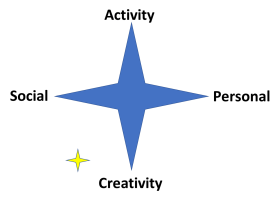
RAC - star UL

I place volunteering on the Activity-Social quadrant of the Retirement Activity Plan Compass, so if your RAP is lacking there, volunteering may be an opportunity. I had an Aunt, Mildred W. of Sun City, AZ, who was volunteering at the local hospital into her late-80’s. Don’t let yourself be limited by age if you don’t have to.

I found my volunteer organization about 20 years ago through the IRS, the happy way – I contacted them. You may want to try a volunteer position or two in pre-retirement to see what fits for you.  If you’re looking for a volunteer position, check out Volunteer Match. You can put in your zip code and key words and find the volunteer opportunity that’s perfect for you. Last week I looked up some opportunities for a young lad, who is between IT jobs, to help keep his skills fresh and there were plenty of opportunities out there.

Memento mori*

It was a great day until I got the mail. I received a memento mori* from Globe Life today:

IMG-7248

A reminder to us all, I guess. Now that it’s the new year, you might want to revisit, or draft your first, living will (aka advanced directive).  Make it easier on those who may have to make decisions for you when you cannot.

Actions you can take include:

-Check out Volunteer Match for a volunteer opportunity that fits you.

-Memento mori yourself – create or update your living will.  Your local hospital or library will likely have forms for you for free.

And if you have not seen the “Why you should read this blog…WIIFY” post, it’s here.

Questions, comments, or suggestions for retirement surprise areas you want to know more about?
-Leave a comment
-Use ‘Contact’, above, to send an email.

*  Memento mori is the medieval Latin Christian theory and practice of reflection on mortality, especially as a means of considering the vanity of earthly life and the transient nature of all earthly goods and pursuits. (Wikipedia)

Oops, or New Year Fiscal Fitness

Oops!

One of our readers suggested more pictures and personal anecdotes, so here is an anecdote:

Last week Mr. and Mrs. No Surprises Retirement compared our actual spending to our proposed retirement budget.  Oops – there were a number of areas where we were way over budget!

The picture, below, is of me looking at the results of the comparison!

IMG_7256

The good news is that we’re not retired yet, so we weren’t overspending our ‘real’ retirement spending plan.  There’s still time to tune and track better.

Fiscal fitness

The goal of No Surprises Retirement is helping you avoid bad retirement surprises.  One of the worst retirement surprises is overspending in the early years and then running out of money in the later years.  Almost every TV show now has a lot of fitness and weight loss advertising (like every late-December through early-January).  This post will help you with improving your fiscal fitness in 2018.

Corporations and non-profits are experts at fiscal fitness (at least the ones that stay in business are!) They use budgets, income statements, and balance sheets to manage their business.  We may talk about income statements and balance sheets in some later post, but for this post we’ll focus on the budget.  The key parts to budgetary fiscal fitness are:

Budget – know what you plan to spend monthly/annually (and that the spending fits within your income).

Tracking – track your spending to the budget and determine where there you are going under or over, and why. (In corporate speak, we call these ‘variances’.)

Adapting – adapt to variances by adjusting future spending.  For example, if you spent too much on medical because you went to the ER, you may need to cut out movies for the rest of your life a few months.

Just like the stretches you’ll do in the three times a week aerobics class that one month you go to the gym, budgeting is something you need to pay attention to frequently (at least bi-weekly) but unlike the gym, you need to do it all year.

Tools for you to manage your budget – spreadsheets

Since we had the budget surprise, I decided to upgrade our budget capability by finding a better spreadsheet than we are currently using.  I decided to stay with a spreadsheet because I don’t need all the features of a personal finance software package and don’t want to maintain my finances on a website. I also decided to download (and don’t forget to virus scan!) because apparently a billion people have already shared their budget spreadsheets  online and this way I could start without having to reinvent the spreadsheet the wheel!

As usual, Google helped out with the search and I ran across ‘the balance’.

There are a number of budget spreadsheets reviewed and linked to on ‘the balance’ site, so you’ll probably find one to use and like.

I liked a couple:

It’s Your Money! in their ‘Free Budgeting Spreadsheets’ has a number of budgeting spreadsheets.  The IYM Spending Plan Spreadsheet looked promising.

Vertex42 also had budget spreadsheets.  Their Family Budget Planner looked excellent.

‘the balance’ also has a section for Google Docs Budget Spreadsheets. I think we’re going to try the cleverly named Best-Personal-Budget-Planner.  I downloaded it and converted it to Excel, but it looked very usable in Google Sheets as well (and if you don’t own Excel, Sheets is free.)

Most of the spreadsheets suggest budget categories.  Another excellent source for retirement expense budget categories comes from BlackRock.

Actions you can take include:

-If you’re not already using one, pick a spreadsheet or some software to track your expense budget.

-Put your 2018 budget in the tool and start tracking and analyzing!  Good luck!

And if you have not seen the “Why you should read this blog…WIIFY” post, it’s here.

Questions, comments, or suggestions for retirement surprise areas you want to know more about?
-Leave a comment
-Use ‘Contact’, above, to send an email.

Dear Reader, please share your genius!

First, a thank you!

Thank you! From the visitor counts, apparently a lot of people stopped by to read one of No Surprises Retirement’s blog entries in 2017.  I hope they were entertaining and helpful.  Entertaining is sometimes a challenge with financial topics as they can be dry and directive, or, as some people call it, ‘boring’.

Share your genius

Please let us know what your favorite posts (post?, anything Bueller?) of 2017 were. Then, please think about topics you would like to see from No Surprises Retirement in 2018. Leave me a comment (click on ‘leave a comment, below) or send an email to nosurprisesretirement@gmail.com

What, me blog?

Think about perhaps doing your own blog in 2018 – maybe you have expertise or opinions to share on fishing, travel, dining, or something else.  A basic WordPress site is free.  Think of it as part of your Creative-Social Retirement Activity plan!

RAC - star LL

Actions you can take include:

-PLEASE – leave us a comment or send us an email on what you like, don’t like, and want to see in 2018!

-Check out WordPress and start blogging.

And if you have not seen the “Why you should read this blog…WIIFY” post, it’s here https://nosurprisesretirement.com/2017/07/09/first-blog-post/

Questions, comments, or suggestions for retirement surprise areas you want to know more about?
-Leave a comment
-Use ‘Contact’, above, to send an email.

A Christmas 10%, 15%, 25% or more short term return!

I forked over

I paid my 2018 property taxes early and I will net at least 15% on the deal!  My county made it extremely easy to go on their website and eCheck the 2018 payment.  I reviewed our 2016 Schedule A and our deductions were less than the 2018 tax year standard deduction ($24,400 for a married couple). I roughed in 2017 and it looked like the same case for what I’ll be filling out here in a month or so, still below the 2018 limit. Poof – easy choice to accelerate my 2018 payment, so then I went and found the money to put in checking to pay it (less poof there!).

Disclaimers, always disclaimers

Again, no, not a scam.  This may actually be an opportunity for you.  The latest tax changes have passed and will take effect in 2018 (mostly).  We noted some tax planning opportunities in the “Urgent money opportunity!” post. Still acting quickly, there may be another 2017 tax planning opportunity with property taxes for you that could be the equivalent of a 10-25% return (or more depending on your marginal tax bracket).  We’re providing general advice here, please check with your tax adviser for your specific situation.  And by act quickly, that means by 12/31/2017.

Facts, again

Tax rates – generally going down next year, meaning that deductions are worth more this year than next.

Standard deduction – going up next year, meaning you need more deductions to obtain any benefit from a Schedule A deduction.  Also, your state and local tax deduction (property and income taxes) will be limited to $10,000.

Property taxes

The facts above may add up to a planning opportunity for you this year with property taxes.

Hypothetically, maybe you are a retiree or near retiree that has paid their 2017 property taxes and you itemize on Schedule A and your Schedule A deductions exceed the standard deduction.  The 2017 property taxes will be part of your Schedule A deduction.

You may be able to prepay your 2018 property taxes, on or before 12/31/2017.  If you do, you will also include those on your Schedule A and the tax ‘reduction’ from that additional deduction should decrease the tax you owe by your marginal rate, 10 to 25% or more.  That’s kind of like getting a CD paying a huge rate – something you likely don’t want to pass up.

Example

As an example, let’s say your 2018 property taxes are $1,000 (easy round number) and your marginal rate is 15%, and the extra $1,000 deduction does not move you into a lower marginal rate – that’s an extra $150 back as a refund.  Or, like getting a one-year CD with a 15% return.  You’ll have to pay the tax anyway, why not make it a little less painful.

In this example, we assume that in the 2018 tax year (the one you file by April 15, 2019) the $1,000 is ‘buried’ in the standard deduction and there is no ‘additional’ tax benefit.  You only get an explicit deduction and bigger refund if you accelerate the payment to 2017.

If, based on your tax advisers’ analysis and your state/county/city allowing it, you make your 2018 property tax payment now, you may get a bigger deduction (and lower taxes/bigger refund) on your 2017 return.

How to from WUSA

Here’s a piece that WUSA 9 in DC did to help people understand how to prepay.  They mention mortgages where taxes are escrowed.

Actions you can take include:

-Call your tax advisor and analyze your 2017/2018 planning opportunity.

And if you have not seen the “Why you should read this blog…WIIFY” post, it’s here https://nosurprisesretirement.com/2017/07/09/first-blog-post/

Questions, comments, or suggestions for retirement surprise areas you want to know more about?
-Leave a comment
-Use ‘Contact’, above, to send an email.

Urgent money opportunity!

No, not a scam.

This may actually be an opportunity for you.  The latest tax changes have passed and will take effect in 2018 (mostly). If you act quickly, there may be some 2017 tax planning opportunities that will save you more money this year than next!  (We’re providing general advice here, please check with your tax adviser for your specific situation).  By act quickly, that means by 12/31/2017.

Facts

Tax rates – generally going down next year, meaning that deductions are worth more this year than next.

Standard deduction – going up next year, meaning you need more deductions to obtain any benefit from a Schedule A deduction.

These two may add up to a planning opportunity for you this year.

Charitable scenario

Hypothetically, maybe you are a retiree or near retiree that has charitable goals or commitments. You’re trying to make the world a better place, but you don’t want to squander cash. If, based on your tax advisers’ analysis, you make your 2018 gift now in 2017, you may get a bigger deduction (and lower taxes/bigger refund) on your 2017 return, and the charity likely won’t care if they get the 2018 gift a little early.

Stock loss scenario

Also hypothetically, maybe you are a retiree with some stocks that have losses. If, based on your tax advisers’ analysis, you sell and take a 2017 loss, that will mitigate more taxes than the same action in 2018. And, your tax adviser may tell you that if you really love the stock that had a loss, you can buy it again after 60’ish days. Or, your tax adviser may tell you that it will give you the cash to make that charitable gift (above). So, give your tax adviser (and you!) a holiday season gift by calling them tomorrow!

Actions you can take include:

-Call your tax advisor and analyze your 2017/2018 planning opportunity.

And if you have not seen the “Why you should read this blog…WIIFY” post, it’s here https://nosurprisesretirement.com/2017/07/09/first-blog-post/

Questions, comments, or suggestions for retirement surprise areas you want to know more about?
-Leave a comment
-Use ‘Contact’, above, to send an email.

Free stuff!

Who doesn’t like free?  This post should help you on the Creativity-Social area of the Retirement Activity Compass.  You will probably want to update your personal Retirement Activity Plan (RAP) when you’re done reading!

RAC - star LL

Remember back to the “Pre-retirement or retired, why not RAP?” post?  We focused on ‘creativity’ to help keep our retired minds sharp and ‘social’ to help keep us connected to each other and the community.   One way to get a toofer on that is to learn something new by taking a class – a free class.

Free #1

Mrs. NoSurprisesRetirement has completed a number of classes on various aspects of the history of the United Kingdom from her favorite free e-learning site, Futurelearn.  A couple her favourites (British spelling of favourites, get it?  Ha!)  were ‘A History of Royal Food and Feasting’ and ‘England in the Time of King Richard III’.   I looked at Futurelearn today and they have pretty much everything from anatomy to writing fiction.  Classes are available both anytime (Beginning Dutch, anyone?) and scheduled. Mrs. NoSurprisesRetirement likes the scheduled courses because of the interaction available when you comment on the content or questions.  Futurelearn is Mrs. NoSurprisesRetirement’s favorite e-learning site because of the diversity in class formats and the international audience. People in her Richard III class lived within a few miles of the key historical sites and provided really interesting comments.

Free #2

If you’re like us here in the frozen northland Minnesota and you are 62 or over, you can audit (sit in on the class for no grade, but it’s OK this time) classes at the U of M and MNSCU’s universities, colleges and technical colleges.  If you’re someplace warmer else your state likely has something similar to the Minnnesota benefit and you can find out here at A SENIOR CITIZEN GUIDE FOR COLLEGE. This is a really good way to learn those things you always wanted to but did not have the time/money before now.

But wait, there’s more!

You can go to Harvard, MIT, or the Sorbonne with edX  This is Mrs. NoSurprisesRetirement’s other favorite e-learning site and, similar to Futurelearn, edX has a wide span of classes. Introduction to German Opera from Dartmouth, The Rise of Superheroes and Their Impact on Pop Culture from the Smithsonian, and Urban Design for the Public Good: Dutch Urbanism from TU Delft are just some examples.

Don’t stop there – check the library

My local public library provides two different language learning programs, one of which is from Rosetta Stone.  They also provide Lynda (now from Linkedin) which has classes on just about everything, including Microsoft Office for that new computer you’ll get for Christmas and photography for that DSLR you got last year.

Sample Retirement Activity Plan template – free!

I put a RAP template out on Google Drive for you to download and modify to personalize as needed.  It’s in Word format, but let me know if you need one in Google Sheets format. Copy and paste this link:

https://drive.google.com/drive/folders/13rGYZR8yl5IwXciqzp7WuUOGNWX8_auP?usp=sharing

into your browser (I primarily use Chrome) and you should be able to see them and download.  Let me know at nosurprisesretirement@gmail.com if you have a problem.

Actions you can take include:

-Develop and/or update your RAP.

-Don’t forget about the social aspects of retirement – reach out to a friend and re-connect, especially now in the holiday season.

And if you have not seen the “Why you should read this blog…WIIFY” post, it’s here https://nosurprisesretirement.com/2017/07/09/first-blog-post/

Questions, comments, or suggestions for retirement surprise areas you want to know more about?
-Leave a comment
-Use ‘Contact’, above, to send an email.

My daughter said…

My daughter told me that I should add some personal things into No Surprises Retirement to make me more human to my readers. I’m an IT guy who has expertise in insurance, annuities, mutual funds, tax reporting, and tax preparation. What could be more warm and personal than that?

Ok, so to try and warm you up to me some, we did vacation recently in a world capital with excellent public transportation, friendly people, great museums, and interesting food ranging from Korean fried chicken to handmade (in a window so we could watch!) Chinese noodles. Which capital? Not Ottawa or London, it was Washington DC. We went in November because we find ‘shoulder season’ travel to be uncrowded, generally OK weather (and almost never too hot), and the rates are usually much lower.

Since going to Bonchon for the Korean fried chicken in DC, I have seen a couple of articles on Korean fried chicken and am waiting for it to arrive here in the heartland. (p.s. – the spicy was SPICY.)

RIP – Retirement Income Plan

Failing to plan is planning to fail (old saying). You should have a retirement income plan (RIP) well prior to retirement and you should maintain it in retirement, because changes happen that can affect your plan. I drafted my initial plan when I was 59, even though I was (and still am) a few years out from retirement.

In my opinion, a ‘good’ RIP covers all the sources of retirement income you (and spouse, if any) will receive, shows them year by year, lets you know if they adjust for inflation, and compares them to a desired budget amount to let you know if you need adjustments. A ‘perfect’ RIP would also make inflation adjustments.

This episode of the blog will cover the RIP. A future episode will cover the other half of the equation, budgeting. Note – another name for the RIP might be retirement income cashflow because it shows you the flow of income cash over the years.

Sample RIP spreadsheet(s) – free!

I put a simplified version of my RIP spreadsheet out on Google Drive for you to download and modify to personalize as needed. I included Excel and Google Sheets versions (the Excel is a little nicer but Google Sheets software is free). Copy and paste this link:
https://drive.google.com/open?id=1Ri7FRjzqUFj_iHKeeP_Nh_N8pFpDn_sv
into your browser (I primarily use Chrome) and you should be able to see them and download. Let me know at nosurprisesretirement@gmail.com if you have a problem.

TANSTAAFL* – The RIP will require work on your part!

The work:
-go to SSA.gov and get an updated ‘Your Social Security Statement’ for your Social Security income inputs.
-use an RMD calculator to calculate the RMD’s you’ll have to start taking at 70.5, but subtract out any funds from RMD’able accounts that you will take out prior to 70.5 Here’s a pretty good one from Schwab. You can also search ‘rmd calculator’.
-if you have a pension and/or annuity, figure out when you’ll be taking it and what the amount will be.

Use those numbers to complete the ‘Income Components’ tab of the RIP spreadsheet and enter the first year prorated amounts in the initial year.

Some of you may not be as familiar with Excel or Google sheets and may want your start year to be other than 2020. Two solutions; find a friend who can help or find an Excel or Sheets class at your local library or online. If you’re not a DIY’er on these things, a trusted financial professional most likely has retirement income planning software to use for your personal situation.

Actions you can take include:

-Develop and/or update your retirement income plan

-Don’t forget about your retirement activity plan – reach out to a friend and re-connect, especially now in the holiday season

And if you have not seen the “Why you should read this blog…WIIFY” post, it’s here https://nosurprisesretirement.com/2017/07/09/first-blog-post/

Questions, comments, or suggestions for retirement surprise areas you want to know more about?

-Leave a comment
-Use ‘Contact’, above, to send an email.
* – TANSTAAFL – There ain’t no such thing as a free lunch.

My wife asked…

My wife asked, “Why isn’t your blog more upbeat?”  I said, “Because ‘No Surprises Retirement’ is about preventing or mitigating bad retirement surprises.  It’s not ‘happy everything goes right retirement’, that’s a different guy.”  Then she hummed a funeral dirge.  There’s no pleasing some people.

Ch-ch-ch-changes – Retirement Adaptability

Things change over time, in our work and our life.  They also change when our ‘work’ is retirement.  A big topic in the news right now is the Republican tax bill that will make changes to taxes on individuals as well as corporations.  We won’t make any value judgments on the tax bill here, because the key No Surprises lesson is that tax changes will periodically happen (regardless of party) and your retirement plan will need to adapt to them.

The tax bill is not passed yet, so anything could happen to the individual provisions, but let’s examine a few of the current proposals and discuss their general effects on your retirement income plan.  My retirement income plan extends from next year, in case I have to retire suddenly and early, to age 90.  I don’t plan to retire until about 2020, but if I have an unforeseen early retirement, I have a plan.

Speaking of an unforeseen early retirement, the Society of Actuaries, in their 2013 Risks and Process of Retirement Survey, found that, “People actually retire at a much earlier age than people say they want to retire. In the 2013 study, the median age at which people retired was 58 compared to 65 as the median age when people said they want to retire. This is not surprising when involuntary and “pushed” retirements are considered.”

Tax rates change

As part of my budget, I look at my planned retirement income for the year (gross), then calculate what the Federal and state income taxes would be.  Subtracting the taxes from the gross leaves our spendable retirement income (net).  Those calculations are based on what the current rates (2017) are.  Once the Congress passes the tax bill, I will have to check out the new rates and recalculate to enable us to see what our new spendable income will be.

FIFO capital gains rules change

The easy explanation on this one is, if you were going to sell your stocks with the lowest gains first to minimize taxable income and capital gains taxes, you won’t have that flexibility in the future.  Specifically, if you are a person using non-qualified (not 401(k), 403(b) or the like) investments who planned on using stock or mutual fund sales, the revised tax code may require that all stock sales be made first in-first out.  Generally, this will mean greater gains subject to tax, with a corresponding impact to the retirement income plan and budget.

As it has been since Biblical times

Taxes are a fact of life.  It looks like they will change in 2018.  Given the demographics of the USA, with a lot of baby boomers retiring and using Social Security and Medicare, my suspicion is that they will change again in the relatively near future (8-10 years).

What you can do about taxes

The controllable parts of taxes are:

-Understand your retirement income plan and how the income components are affected by the income tax (yep, up to 85% of Social Security is taxable, depending on income).  You may want the advice of a trusted financial professional on this.

-If there are tax code changes you want, call your elected representatives, vote, and support advocacy organizations that advocate for your preference.

-Know that the ‘rules’ for 2018 taxes will be changing and figure out (perhaps with a professional tax advisor) if there are things you should be doing right now in these waning days of 2017.  You might be able to take advantage of the current ‘tax rules’ that will mitigate the impact of effects of the 2018 changes that would be negative for your personal tax situation.  (Example – Gifts of highly appreciated securities to charity are more valuable, tax wise, when rates are higher.)

Actions you can take include:

-Make sure you have an updated retirement income plan

-Make sure you have a retirement budget, based on a realistic assessment of net retirement income.

-One of the next No Surprises Retirement blog posts will be on life insurance.  If you’re thinking about getting rid of a policy and don’t have to this instant, you might get some ideas from the upcoming post.

Note: I plan to put out Excel templates for samples of both a retirement income plan and a retirement budget before the end of 2017, but you can likely find some with web searches if you want to start now, which you should…

Questions, comments, or suggestions for retirement surprise areas you want to know more about?
-Leave a comment
-Use ‘Contact’, above, to send an email.

Tax and Legal Disclaimer
The materials available at this web site are for informational purposes only and not for the purpose of providing tax and/or legal advice. You should contact your Enrolled Agent, CPA or attorney to obtain advice with respect to any particular issue

It’s embarrassing and not openly discussed…

Elder Financial Abuse 

I was hoping for an upbeat topic for the return to the blog, but with the holidays coming up, it seems like a good time to share some important information that you can re-share at holiday gatherings to help others.  Apologies for the gap in blog entries, but a virus (organic, not computer), work, and a vacation pulled me off the path of publication.

Elder financial abuse (EFA) is an increasingly visible issue with elder advocates, law enforcement, and financial services firms.  Per www.preventelderause.org, “Elder financial abuse spans a broad spectrum of conduct, including:
-Taking money or property
-Forging an older person’s signature
-Getting an older person to sign a deed, will, or power of attorney through deception, coercion, or undue influence
-Using the older person’s property or possessions without permission
-Promising lifelong care in exchange for money or property and not following through on the promise
-Confidence crimes (“cons”) are the use of deception to gain victims’ confidence
-Scams are fraudulent or deceptive acts
-Fraud is the use of deception, trickery, false pretense, or dishonest acts or statements for financial gain
-Telemarketing scams. Perpetrators call victims and use deception, scare tactics, or exaggerated claims to get them to send money. They may also make charges against victims’ credit cards without authorization.”

The Better Business Bureau has a great EFA tip sheet here.

Now that I know what to look for, I recognize that my Mom was taken advantage of by telemarketers selling books; I believe she was trying to win their ‘contest’.  Fortunately for her and us, the loss was relatively minor.  For many seniors, the EFA losses are financially significant, emotionally painful, and embarrassing.  Unfortunately, the embarrassment factor keeps many seniors from reporting EFA, so we probably do not know the true extent of the problem.

EFA is a serious problem, with some sources claiming that approximately 6% of the senior population is affected annually, with a $36 billion impact.

EFA is definitely a bad retirement surprise that everyone wants to avoid.  Since we’re approaching the major year-end holiday periods, this will be a good opportunity to review what you can do to understand and protect against EFA and hopefully share the information with friends and family at holiday gatherings.

Facts of Life

We are all getting older, and as we move into older ages, many of us will experience the standard physical and mental decline of aging humans.

The Better Business Bureau (BBB) studied EFA and noted that risks for EFA included, “
-Memory, reasoning, and/or judgment impairments which prevent giving informed consent
-Isolation or limited community connections
-Substantial resources (Social Security, pensions, savings, real estate, investments, assets, insurance, etc.)
-Money matters feel intimidating so the elder allows a family member to oversee/ take over their finances
-Reliance on a family member for housing, transportation, errands, etc.”

Basically, as we get older our cognitive ability declines, including math and critical analysis. Combine that with social isolation and complex finances and there’s an opening for elder financial abusers (aka thieves).

To protect yourself, the BBB suggests, “
-Plan ahead to protect your assets and ensure that your wishes are followed
-Consult with a licensed financial adviser or attorney before signing complex agreements or anything you don’t understand
-Build relationships with financial professionals who can assist you in monitoring for suspicious activity
-Leave a paper trail by using checks and credit cards instead of cash
-Trust your instincts and say, “No.” Remember, it is your money
-Report suspicions to a trusted person if you feel pressured to provide financial information or access
-Ask for details in writing and get second opinions about financial matters before changing your power of attorney, wills, trusts, etc.”

Our Plan

Last year in December, my wife made me gather our three children in the office and talk to them about money (honestly, I would have rather discussed anything else!)  I reviewed our retirement income plan and our savings and investments with them to give them a general overview of where we are.  Moving forward, we will likely repeat this annually until about age 70, when we will start to review income and expenses monthly.  That way if we need to move to less of Grandfather’s DIY financial planning and more of the adult children’s assistance, it will be a smooth transition.

We are fortunate to be a family that communicates well.  If we plan to purchase something, we already likely discuss it with the rest of the family.  While this has some downsides (my son is pretty strict on what car manufacturers are acceptable), it would prevent an EFA door-to-door salesman from ripping us off on siding, because we would already plan on checking with the kids and friends.

Actions you can take include:

-Review this BBB webpage.  The video is engaging and worth the time.

-Plan early – develop relationships with estate planning attorneys (everyone needs a will!), trusted financial advisors, and other trusted coaches (colleagues from work, friends, relatives) before and at retirement.  Then you will have people who you can turn to when you have questions about a pitch from someone that may be an EFA attempt.

-Take a minute and reflect on whether a loved one, a friend, or even yourself may be at risk for EFA.  Ask if they need help and consider referring them to the BBB site.

Questions, comments, or suggestions for retirement surprise areas you want to know more about?
-Leave a comment
-Use ‘Contact’, above, to send an email.